
10 Days Ruaha And The Remote West
The Overview
Why it stands out
Journey Highlights
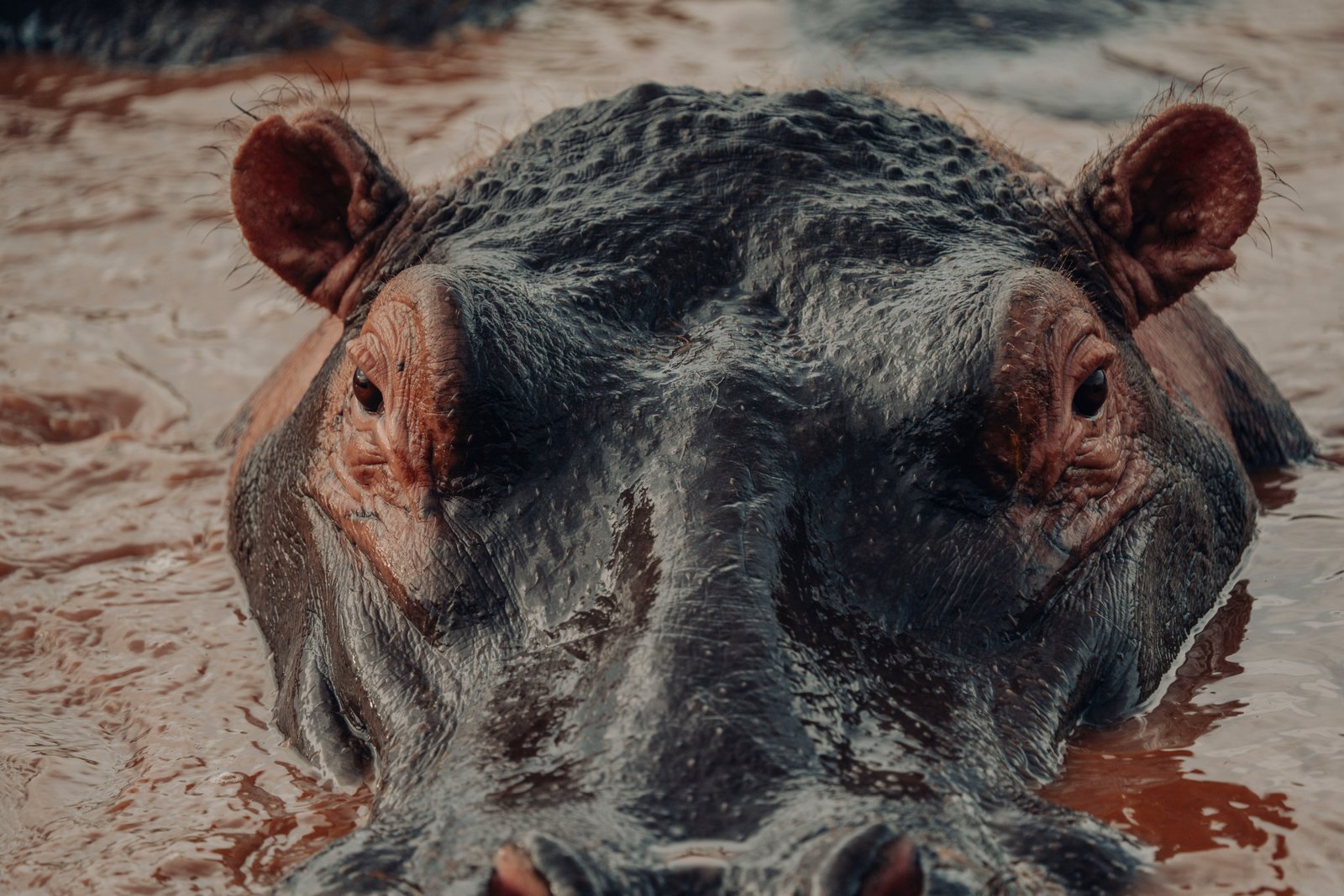
- Katavi's hippo pools --- one of Africa's great wildlife spectacles, experienced in solitude
- Tanzania's largest buffalo herds ranging across the Katavi floodplains
- Four days in Ruaha with lion, leopard, wild dog, and elephant
- Walking safari in both parks with armed ranger
- One of the most remote safari combinations available in Africa
- Specialist species including puku, roan antelope, and sable
The Route
Day by Day
AFTERNOON / EVENING
Arrival at Julius Nyerere International Airport and transfer to your city hotel. An evening in Dar es Salaam provides a comfortable transition between the international journey and the wilderness that follows. Dinner at the hotel.
Where you'll stay
MORNING / AFTERNOON
Morning flight from Dar es Salaam to Msembe airstrip in Ruaha. The safari begins with an afternoon game drive along the Great Ruaha River, establishing the key habitats and animal movements that will characterise the next three days. The park's scale becomes apparent immediately --- this is not a contained reserve but a genuine wilderness of more than twenty thousand square kilometres.
EVENING
Welcome dinner at camp. Your guide outlines the following days and the specific areas of the park to be explored.
Where you'll stay
MORNING
The day begins on the river, following the Great Ruaha north from camp through the most productive game-viewing corridor in the park. Elephant herds occupy every section of the river bank, their movement from pool to pool creating a constantly shifting tableau. Two large prides of lion are known to use this stretch of river as their core territory; the morning finds one of them near a recent kill, the adults gorged and somnolent, the cubs alert and playful around the carcass.
AFTERNOON
The afternoon explores the palm thickets and grassland east of the river, where the ground hornbill families forage in the midday heat and the kudu browse at the thicket edge. A herd of sable antelope --- one of the southern circuit's signature species --- moves through the miombo in the late afternoon light, the dominant male's curved horns catching the sun.
EVENING
Sundowners at the river bend. The hippos resurface as the light fades, and the first jackals begin to call from the far bank.
Where you'll stay
MORNING
A walking safari at dawn through the baobab valley terrain west of the river. On foot, the scale of the baobabs is fully comprehensible for the first time --- trunks the width of small houses, bark worn smooth by generations of elephant. Your ranger tracks a herd of twenty elephants through the red earth, reading the direction and pace of their movement from signs invisible to the untrained eye.
AFTERNOON
Return to the vehicle for an afternoon that focuses on the Mwagusi tributary and its resident leopard population. The riverine forest along the Mwagusi is dense and layered, and the cats use the canopy and fallen logs with a familiarity that speaks to generations of undisturbed residence. A female and her half-grown cub are located in the early evening, moving in parallel through the undergrowth forty metres apart.
EVENING
Final evening in Ruaha. The camp cook has prepared a special dinner. Your guide is already planning the logistics of tomorrow's flight west.
Where you'll stay
MORNING
The flight from Ruaha to Katavi National Park crosses the full breadth of western Tanzania --- a journey of approximately two hours that covers some of the most uninhabited terrain on the continent. From altitude, the Katavi floodplains are visible from a distance: a pale, seasonal grassland that contracts as the dry season progresses, concentrating wildlife in its diminishing margins. You land at Katavi airstrip and the difference from Ruaha is felt immediately. Katavi is quieter, rawer, and carries a wildness that takes a moment to fully register.
AFTERNOON
The afternoon game drive follows the Katuma River south toward the main hippo pools. Nothing quite prepares you for what you find here. In the dry season, the pools hold hundreds of hippos compressed into a space that seems entirely inadequate for so many enormous animals. The noise is extraordinary. The smell is primal. Crocodiles occupy the shallows between the hippo groups with careful neutrality. Lions have been known to take hippos at these pools in the early morning; your guide will be here before dawn for the next two days.
EVENING
Camp in Katavi is simpler than in Ruaha --- more remote, more basic in the best sense. The nearest other camp is several hours away. Dinner is served by the light of the fire and a single lamp. This is Africa with the volume turned all the way up and all unnecessary things stripped away.
Where you'll stay
MORNING
Pre-dawn departure to the main hippo pools before the first light. The predawn hippo pool at Katavi is one of those experiences that leaves an impression that no photograph entirely captures --- the silhouettes of hundreds of animals in the grey morning light, the constant bellowing and splashing, the occasional eruption of violence as one bull challenges another. Lions materialise from the dark at the pool's edge, testing the margins with a patience that speaks to long experience. The whole drama plays out in absolute solitude. You are almost certainly the only people watching.
AFTERNOON
Katavi's buffalo herds are among the largest remaining in Africa, and the afternoon drive crosses open floodplain grassland where herds of several thousand animals graze in formations that darken the horizon. Wild dog packs follow these herds at distance, waiting for the opportunity that the herds' sheer size makes inevitable. The sky above the floodplain is immense and active with vultures, eagles, and storks in constant movement.
EVENING
An evening walk to the river with your guide as the light fails. Fireflies in the riverine vegetation, the silhouette of a hippo at the water's edge. Camp fire and early sleep.
Where you'll stay
MORNING
The third morning in Katavi takes the vehicle into the park's remote south, where vehicle tracks are faint and the landscape feels genuinely unexplored. Roan antelope and puku --- species rarely seen outside western Tanzania --- graze in the open grassland alongside topi and waterbuck. Your guide drives by knowledge and instinct here rather than route, following fresh tracks and the movement of birds overhead.
AFTERNOON
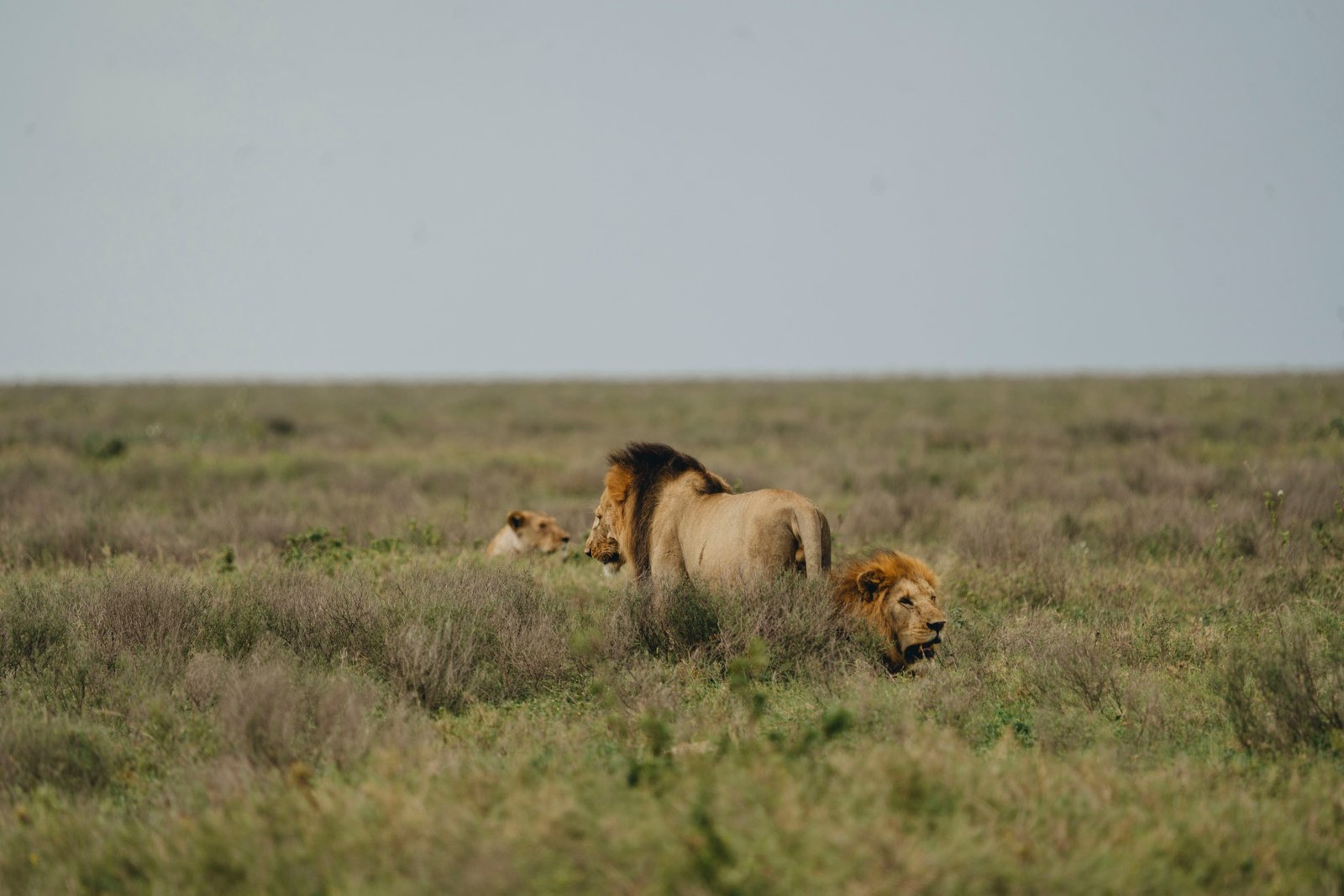
Return north along the floodplain edge, where the afternoon's lion activity is most reliably concentrated near the water. A coalition of three large male lions has been resident along the Katuma for the past month, your guide reports, and they are found in the late afternoon resting on a raised bank above the river with the comfortable authority of animals that own their world.
EVENING
Sundowners on a high bank above the river, the western sun painting the floodplain in shades of copper and amber. The buffalo herd is still visible in the middle distance, a dark mass moving very slowly south.
Where you'll stay
MORNING
A full day with no fixed destination --- the kind of day that Katavi is built for. Your guide reads the morning's tracks and follows them wherever they lead. A leopard has moved through camp during the night, and its spoor leads north into the riverine thicket. The track is followed for an hour before the cat is found, watching from a branch twenty metres above the ground with a measured contempt for the vehicle below.
AFTERNOON
The afternoon revisits the hippo pools one final time. The pools look different at this hour --- quieter, the drama of the dawn replaced by a heavy, drowsy stillness. Hundreds of hippos packed together, their backs above the waterline, the sound of their breathing audible from the vehicle. Egrets perch between them. It is absurd and magnificent in equal measure.
EVENING
A final camp fire in Katavi. Your guide and the camp staff share stories from the season. This is the end of the western wilderness; tomorrow, the journey home begins.
Where you'll stay
MORNING
The last full morning is devoted to a walking safari along the Katuma River, following the same routes the wildlife uses in the early morning. The walking in Katavi carries a different quality from Ruaha --- the terrain is flatter, the grass taller, and the sense of exposure is more acute. Your ranger moves with deliberate care, and the briefing before departure is thorough. The rewards are proportionate to the attention required: fresh lion tracks at a crossing point, a puff adder coiled in the shade of a riverine palm, a pod of hippos visible from ground level through a gap in the bank vegetation.
AFTERNOON
Return to camp for lunch and the transfer to the airstrip. The flight to Dar es Salaam covers the return journey in a single arc across the Tanzanian interior.
EVENING
Overnight in Dar es Salaam for international connections or a final night before departure.
Where you'll stay
MORNING
Transfer to Julius Nyerere International Airport for international departure. The journey ends here, but the images of the Katavi hippo pools, the Ruaha baobab valleys, and the lion pride on the river bank do not
Investment
Included
- Domestic flights from Dar es Salaam to Ruaha and Katavi to Dar es Salaam
- All transfers and game drives in private 4x4 vehicle
- Services of a professional English speaking safari guide
- Full board accommodation as per the itinerary
- All park entry fees and conservation levies
- Walking safaris with armed ranger in both parks
- Sundowner drinks and complimentary tea and coffee at camps
- Laundry service at selected camps
Excluded
- International flights to and from Dar es Salaam
- Travel insurance (compulsory)
- Visa fees and immigration charges
- Tips for guides, camp staff, and drivers
- Personal items such as souvenirs, curios, and telephone calls
- Optional activities not listed in the itinerary
- Beverages other than those specified
- Excess baggage charges on domestic flights
Continue Exploring
Similar Journeys
EDITOR'S
CHOICE.
The East Africa Edition.
10 Days in Kenya & Tanzania
From US$5,400
per person sharing
Destinations
Amboseli National Park, Ngorongoro Crater & Serengeti National Park
10 Days in Rwanda & Tanzania
From US$6,600
per person sharing
Destinations
Ngorongoro Crater, Serengeti National Park, Tarangire National Park & Volcanoes National Park
7 Days in the Ruaha Wilderness
From US$3,750
per person sharing
Destinations
Ruaha National Park
5 Days in the Heart of Ruaha
From US$2,948
per person sharing
Destinations
Ruaha National Park
10 Days Ruaha and the Remote West
10 days