






12 Day Southern Tanzania Safari Ruaha & Nyerere (Selous)
The Overview
Why it stands out
Journey Highlights
- Two national parks only, five nights in each no rushed transitions and no one night stops
- Two nights in the Usangu wetlands, a recently opened sector in the far south of Ruaha
- Walking safaris and night drives in both parks activities not permitted in the northern circuit
- The Great Ruaha River in the dry season, and some of the largest lion prides in Africa
- Baobab country, and a species list that mixes East and Southern African wildlife in one landscape
- Boat safaris on the Rufiji River and the Nyerere lake system
- One of the continent’s strongest populations of African wild dog
- Optional fly camping night on a Rufiji sandbank
The Route
Day by Day
You are met at Julius Nyerere International Airport and transferred to your hotel in Dar es Salaam. The southern circuit is a fly in circuit and Dar is where it begins. An easy afternoon and evening the first flight goes out in the morning.
EVENING WELCOME BRIEFING
Over dinner your safari consultant walks through the twelve days: what the Ruaha River is doing at this point in the season, how the Usangu sector is running, what the water levels are like in Nyerere and which activities that opens up. Light aircraft in the south carry a strict soft bag luggage limit, and anything surplus stays with the hotel until you return.
Where you'll stay
-
Dar es Salaam → Usangu airstrip
Flight
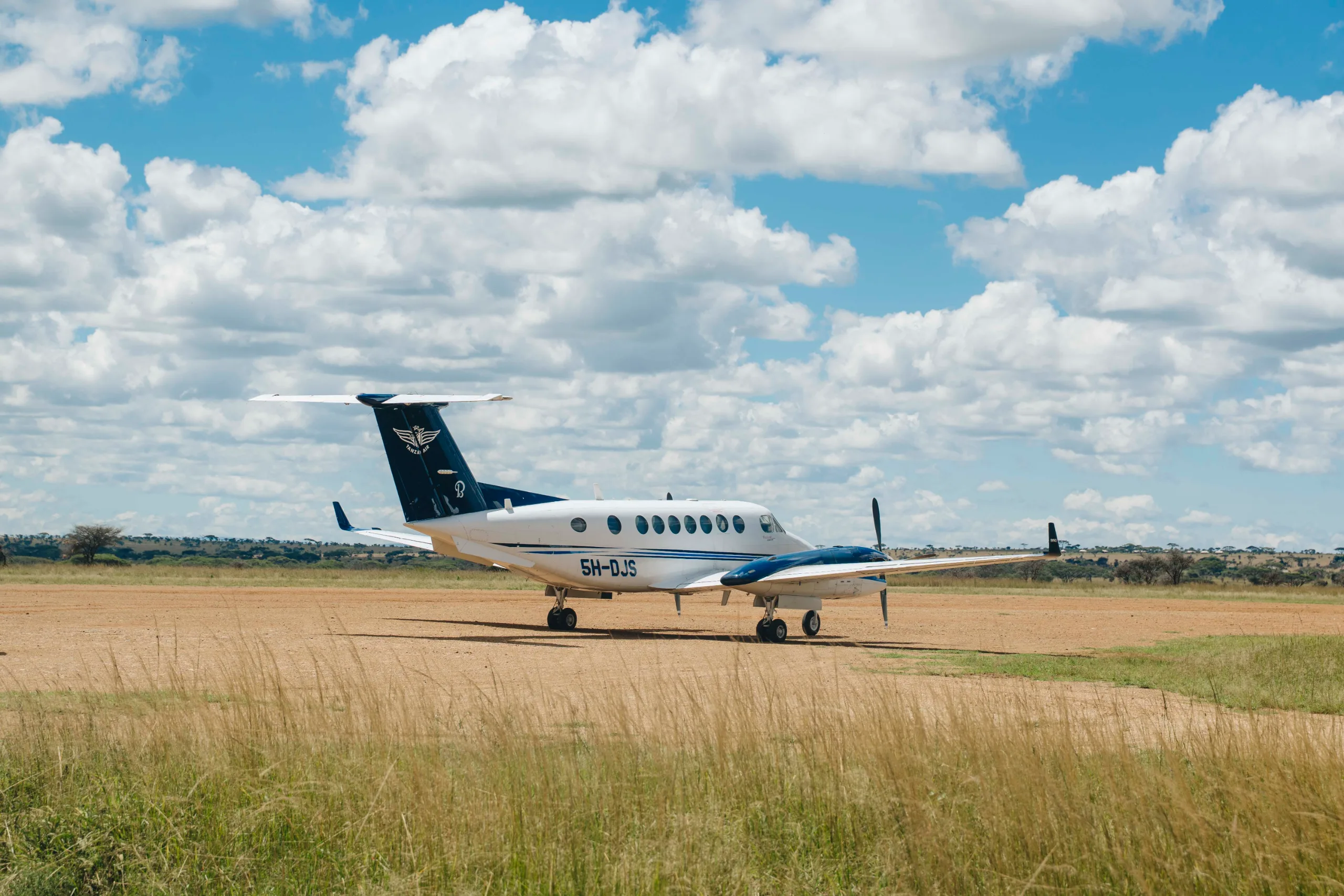
A scheduled light aircraft flight from Dar es Salaam into Ruaha, continuing to the Usangu airstrip in the far south of the park.
MORNING FLIGHT SOUTH WEST
A scheduled light aircraft flight from Dar es Salaam into Ruaha, continuing to the Usangu airstrip in the far south of the park. The flight crosses the Selous ecosystem and then the southern highlands, and the country beneath it steadily empties. Usangu was only incorporated into Ruaha in 2008 and only opened to visitors in recent years; there is a single camp in the whole sector.
AFTERNOON THE WETLAND
Met at the airstrip and driven to camp. The Usangu is a seasonal wetland floodplain, reedbed and open water that feeds the Great Ruaha River, and its birdlife is exceptional. The afternoon is a first orientation drive across the plain, ending with sundowners looking out over water rather than the dust you were expecting.
EVENING NIGHT DRIVE
A night drive with a spotlight after dinner. Genet, civet, bushbaby, honey badger, porcupine, and occasionally leopard or hunting lion an entirely different cast from the daylight animals.
Where you'll stay
-
On foot
Out on foot at first light with an armed guide.
-
Boat
Depending on the season and water levels, the afternoon is spent on the wetland by boat or exploring the plain by vehicle.
MORNING WALKING AND FIELD RESEARCH
Out on foot at first light with an armed guide. Usangu is run as much as a research operation as a safari camp, and guests are welcomed into the work: camera trap checks and retrieval, acoustic monitoring, spoor transects and data recording. It is the most genuinely useful morning you can spend in a Tanzanian park, and it changes how the rest of the journey reads.
AFTERNOON WATER AND PLAIN
Depending on the season and water levels, the afternoon is spent on the wetland by boat or exploring the plain by vehicle. Between roughly May and November the water concentrates and the birding becomes extraordinary crowned crane, open billed stork, pygmy goose, skimmer and a long list of waders.
EVENING
A fire and a sky with nothing in it. There is no other camp within a very long distance.
Where you'll stay
-
Usangu → core of Ruaha
Road
Travel north into the core of Ruaha by road across the park where the season allows, or by a short light aircraft transfer.

MORNING ACROSS THE PARK
Travel north into the core of Ruaha by road across the park where the season allows, or by a short light aircraft transfer. Either way it is a proper crossing of one of Africa’s largest national parks, and the vegetation changes as you go: wetland to miombo woodland to the baobab and commiphora country along the Ruaha River.
AFTERNOON THE RIVER
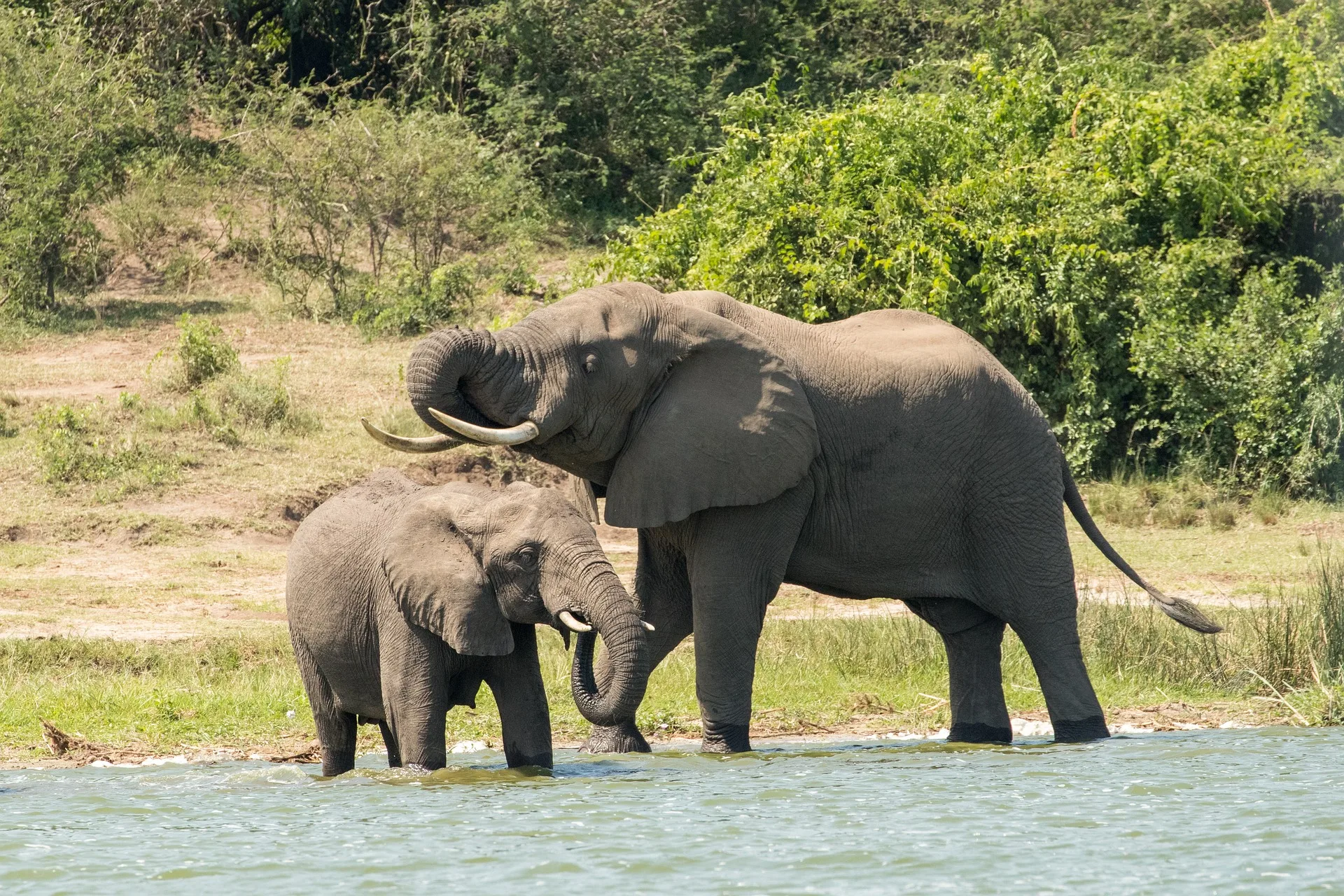
Arrive at camp near the Mwagusi or Ruaha sand river system and go straight out. In the dry season the Ruaha shrinks to a chain of pools in a wide sand bed, and everything within reach comes to drink. Elephant dig for water in the sand with their feet and trunks. Buffalo herds arrive in the hundreds. Lion prides here run large twenty or more animals is not unusual because the prey base supports it.
EVENING
Back to camp in the dark. Ruaha at night is one of the noisier places in Tanzania.
Where you'll stay
-
On foot
A walking safari with an armed professional guide.
MORNING ON FOOT
A walking safari with an armed professional guide. Ruaha is excellent walking country: the sand rivers give you a natural route, the baobabs give you shade, and on foot the guiding shifts entirely from spotting to reading. Tracks, dung, broken branches, alarm calls and wind direction all start to matter. You will cover less ground than in a vehicle and see considerably more.
AFTERNOON THE MWAGUSI CIRCUIT
A long afternoon drive along the sand river circuits. This is the part of Ruaha where the East and Southern African species lists overlap: greater and lesser kudu in the same afternoon, sable and roan in the miombo, and a chance of the park’s wild dog packs on the move. Ruaha’s leopard density is high and the riverine bush is where they hold.
EVENING
Sundowners on a rock above the river, then dinner in camp.
Where you'll stay
MORNING
A full day out with a picnic, planned over breakfast. By now your guide knows what the resident animals have been doing and where the wildlife has been concentrating, and the day is shaped around that rather than around a fixed route. Ruaha is large enough that you can drive for hours without meeting another vehicle.
AFTERNOON
The park’s baobabs deserve time in their own right. Some of them are well over a thousand years old, and elephants strip and gouge them for moisture in a way that leaves every tree individually scarred. The late light on that landscape is the best photography of the southern circuit.
EVENING
Last night in Ruaha. Tomorrow the journey moves to the water.
Where you'll stay
-
Ruaha → Nyerere
Flight • around ninety minutes
A morning game drive to the airstrip and a scheduled light aircraft flight east to Nyerere, usually with one stop en route.
-
Boat
Met on the airstrip and taken to camp near the lake system, then straight onto the water.
MORNING FLIGHT TO THE RUFIJI
A morning game drive to the airstrip and a scheduled light aircraft flight east to Nyerere, usually with one stop en route. Ruaha and Nyerere are far apart and this hop is what makes the southern circuit work; the flight takes around ninety minutes and camp to camp luggage handling is standard.
AFTERNOON FIRST BOAT
Met on the airstrip and taken to camp near the lake system, then straight onto the water. A boat safari is a completely different way of seeing a park: you move quietly, at eye level, and the animals behave as though you are not there. Hippo pods, enormous crocodile, elephant crossing between islands, and a bird list that includes skimmer, white fronted bee eater colonies in the banks, and both fish eagle and palm nut vulture.
EVENING
Back to camp at dusk. Five nights on the Rufiji.
Where you'll stay
MORNING THE LAKE CIRCUIT
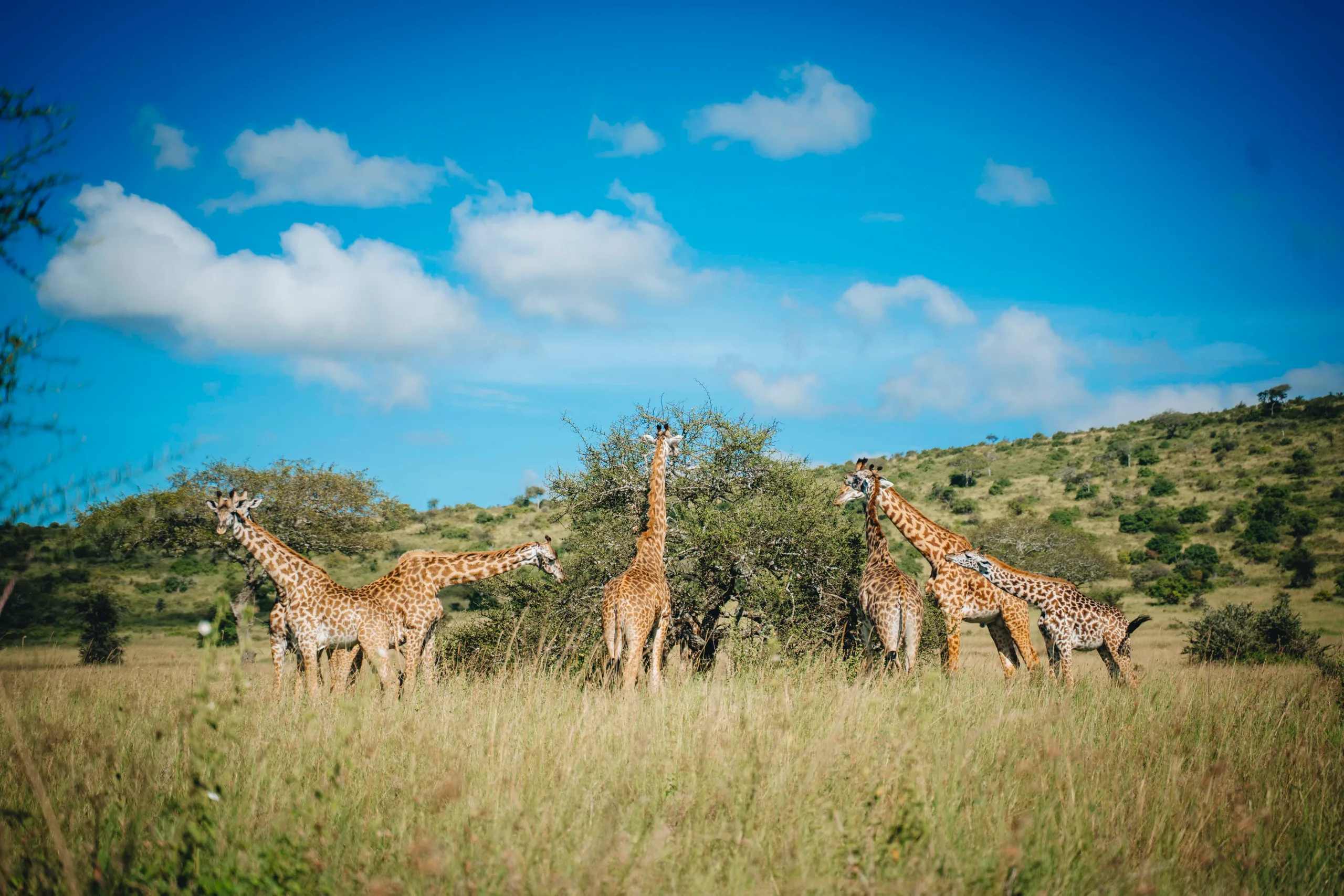
A full morning around the chain of lakes Manze, Nzerakera, Siwandu and the channels that link them. This is the wildlife heart of the park: the lakes hold water when everything else dries, so the game concentrates on their margins. Giraffe, buffalo, waterbuck, impala and elephant in numbers, with lion working the edges.
AFTERNOON WILD DOG COUNTRY
Nyerere holds one of the largest African wild dog populations left in the world. Packs cover very long distances and sightings are never predictable, but denning season in the middle of the year improves the odds considerably, and the guides here track them with real commitment. When a pack is found and hunting, it is among the most extraordinary things in African wildlife.
EVENING
Dinner by the river. The hippo make themselves heard all night.
Where you'll stay
-
On foot
A long morning walk with an armed guide, often starting with a short boat transfer to put you on ground you could not otherwise reach.
-
Boat
An easy afternoon: a boat out for the last of the light, or a chair and a book on the deck above the river.
MORNING ON FOOT
A long morning walk with an armed guide, often starting with a short boat transfer to put you on ground you could not otherwise reach. Walking in Nyerere means sandbanks, riverine forest, palm stands and open woodland, and the emphasis shifts to the small things tracks in wet sand, dung beetles, terrapins, birds, the smell of the bush with the large animals encountered on their own terms.
AFTERNOON
An easy afternoon: a boat out for the last of the light, or a chair and a book on the deck above the river. This journey has deliberately few moving parts and there is no need to fill every hour of it. Optional: Fly Camping A night out on a Rufiji sandbank in a light bedroll under a mosquito net, with dinner cooked on the fire and nothing between you and the river. Arranged in camp, subject to conditions and river level. USD 350 per person.
Where you'll stay
MORNING
A longer excursion upriver towards Stiegler’s Gorge, where the Rufiji narrows and cuts through a hundred metre gorge. The country upstream is wilder and less driven than the lake circuit, and the drive there is as much of the point as the destination. Picnic lunch in the field.
AFTERNOON
Work slowly back through the woodland and along the river. Nyerere’s scale is genuinely difficult to convey the park is roughly the size of Belgium, and the sector that visitors use is a small northern fraction of it.
EVENING
A fire on the sand and dinner under the palms.
Where you'll stay
-
Boat
A final boat safari for the golden hour on the water.
MORNING
The last full day is left open and planned over breakfast. Boat, foot or vehicle, or some combination of all three by this stage you know which of them you like best, and the camp will build the day around it.
AFTERNOON
A final boat safari for the golden hour on the water, which is when the Rufiji is at its best: low light on the palms, elephant coming down to drink, and the whole river turning copper.
EVENING
Final dinner. Twelve days, two parks, ten nights in the field and almost no time spent travelling between things.
Where you'll stay
-
Nyerere → Dar es Salaam
Flight
A scheduled light aircraft flight from Nyerere back to Dar es Salaam for your onward international connection.
MORNING
A last activity where the flight time allows, then a scheduled light aircraft flight from Nyerere back to Dar es Salaam for your onward international connection. Timings are set by the day’s published schedule and confirmed before departure. The southern circuit is the version of Tanzania that most visitors never see, and after ten nights on two rivers it is difficult to argue that the north has the better of it.
Before You Book
Important Information
Accommodation
Hotels, lodges and camps named in this package are subject to availability when your booking is confirmed. If a listed property is unavailable, we will propose a comparable alternative for your approval.
Investment
Included
- All ground transportation and airport transfers throughout Tanzania
- All park entry and concession fees Ruaha National Park, the Usangu sector and Nyerere National Park
- Walking safaris with an armed guide in Usangu, Ruaha and Nyerere
- Night drives in the Usangu sector
- Conservation and field research activities at Usangu as offered by the camp
- Boat safaris on the Rufiji River and the Nyerere lake system
- Full board meals throughout the safari, and camp house drinks where the property includes them
- Professional guiding by resident camp guides throughout
- Open safari vehicle with chilled water and soft drinks, charging facilities, and binoculars
- All accommodation as listed
- All applicable government taxes
Excluded
- International flights
- Scheduled light aircraft flights Dar es Salaam to Usangu, Usangu to central Ruaha, Ruaha to Nyerere and Nyerere to Dar es Salaam quoted separately above
- Travel insurance strongly recommended, and required to include emergency evacuation cover
- Visa and passport fees
- Tips for guides, rangers and camp staff
- Premium wines, champagne and imported spirits
- Personal items
- Optional fly camping night on the Rufiji
- Park fee increases beyond our control
Start Planning
Book this Journey
Secure your dates or begin customizing this itinerary to perfectly fit your preferences.
No commitment required.
Continue Exploring
Similar Journeys
10 Day Luxury Tanzania Safari Serengeti & Ngorongoro Crater
From US$6,450
per person sharing
Destinations
Ngorongoro Crater & Serengeti National Park
15 Day Tanzania Chimpanzee Safari Rubondo, Gombe & Mahale
From US$8,600
per person sharing
Destinations
Gombe Stream National Park, Mahale Mountains National Park, Serengeti National Park & Zanzibar
15 Day Tanzania Safari Serengeti & Rubondo Island Chimpanzees
From US$9,300
per person sharing
Destinations
Serengeti National Park & Zanzibar
17 Day Tanzania Safari Serengeti, Ngorongoro & Private Island
From US$10,500
per person sharing
Destinations
Ngorongoro Crater, Serengeti National Park & Zanzibar
12 Day Southern Tanzania Safari Ruaha & Nyerere (Selous)
12 Days