





An honest answer
How safety actually works on a game drive, in an unfenced camp, on a light aircraft and in the cities without drama, and without dismissing the question.
The answer
Yes with the usual conditions attached
In one sentence: Tanzania is widely regarded as a safe and well established safari destination, provided you travel with a reputable operator and take the same sensible precautions you would anywhere else.
Tourism is a significant part of the national economy, the parks are professionally managed, the guiding profession is licensed and trained, and camps operate to procedures refined over decades.
That is the direct answer. What follows is the detail behind it, because most people asking this question want to understand how safety actually works day to day rather than simply be reassured by a company that would like their booking.
We have deliberately kept this journal short and specific. There are no crime statistics here, no named incidents and no commentary on current affairs all of which date quickly and none of which would help you decide. Where something genuinely warrants caution, we say so plainly. Where it does not, we say that too.
For anything that depends on your own nationality or route visas, entry requirements, vaccination certificates we point you to the official sources rather than restate them, because those are the details that change without notice.
Safety on a game drive
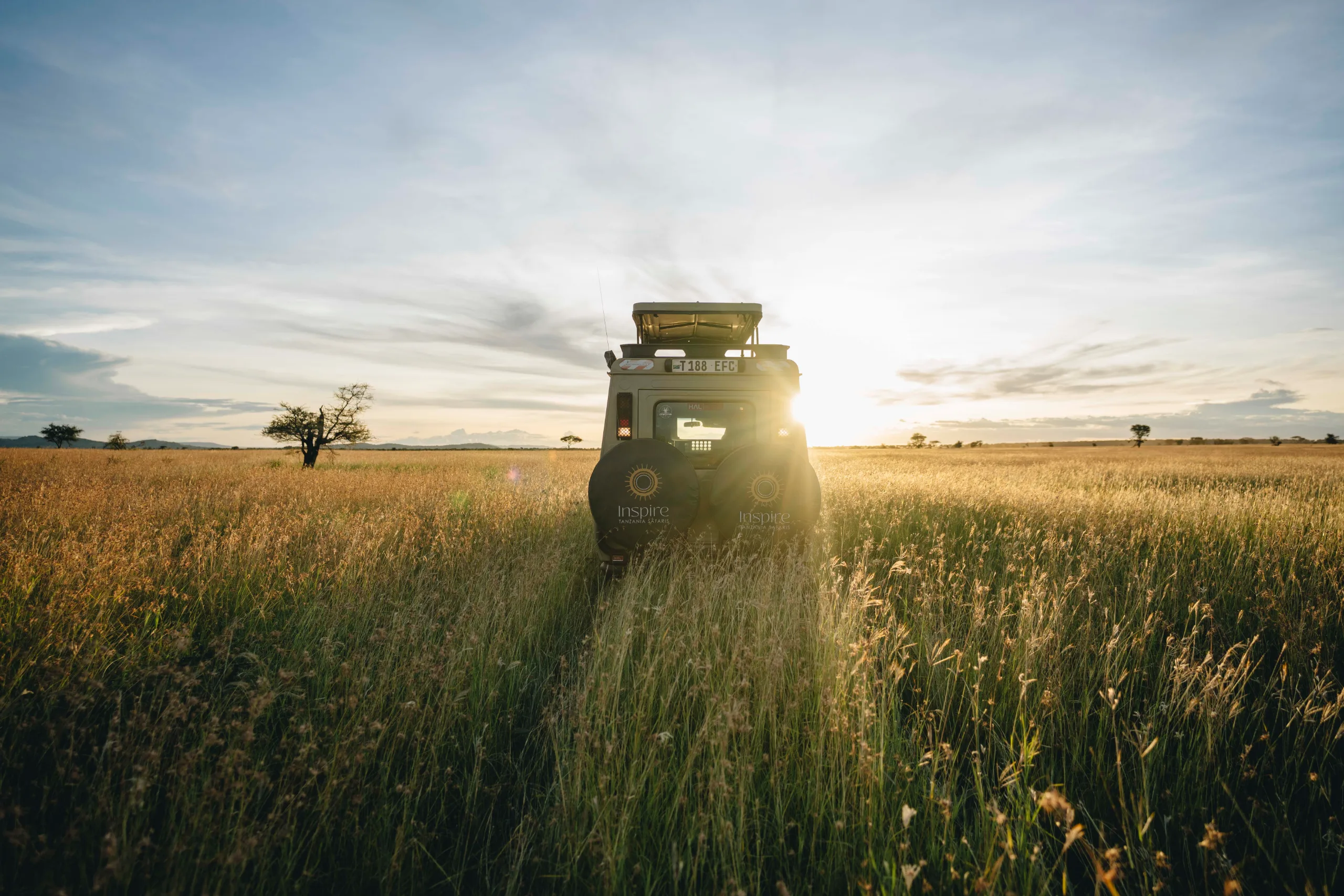
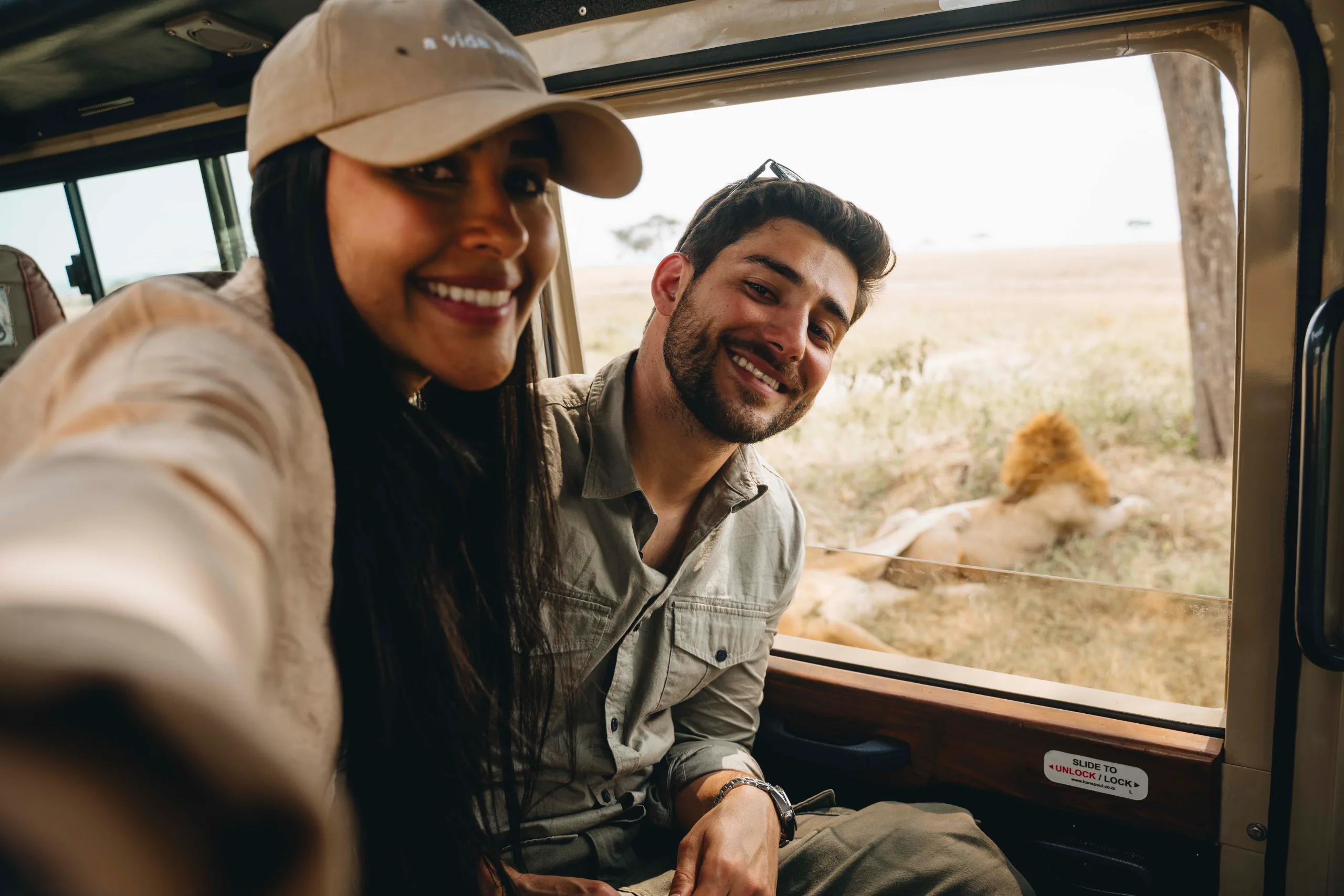
The single most important rule on safari is also the simplest: stay in the vehicle unless your guide tells you it is fine to get out.
Wildlife in the national parks is habituated to vehicles. Animals read a safari vehicle as a single large object rather than as a collection of people, which is why lion, elephant and buffalo will pass within metres without reacting.
Standing up through the roof hatch is normal and expected. Stepping out, or leaning far out of a window, breaks that outline and changes the situation entirely.
Tanzanian guides are licensed, and the good ones have spent years in the same parks. A guide who moves the vehicle away from a sighting is not being cautious for its own sake; they are reading behaviour you have not yet learned to read.
What good practice looks like
- Your guide decides where to position the vehicle and how close is appropriate
- Engines stay running or off at the guide's judgement
- Voices stay low at sightings which improves the sighting anyway
- Designated picnic and toilet stops are used rather than improvised ones
- No feeding, no calling to animals, no leaning out for a photograph
Inspire tip
A private vehicle is a safety feature as well as a comfort one. It means the pace of the day is set by your group rather than by strangers, which removes most of the pressure that leads people to push a sighting further than they should.
Camps, lodges and the unfenced question
Safari camps are not fenced in most of Tanzania's parks. That surprises people and it is entirely normal.
After dark
You are escorted. A member of staff or an askari walks you between your tent and the main areas at night. This is standard at every reputable camp, it is not optional, and it is not a formality: animals move through unfenced camps at night, which is precisely the point of staying in one.
During the day
You can move freely. Within the camp area, subject to the property's own guidance. Staff will tell you the boundaries on arrival, and those boundaries are specific to that camp rather than generic.
Your tent
Keep it zipped. Canvas tents zip closed, both against wildlife and against the baboons and vervet monkeys that are far more likely to investigate an open tent than anything larger is.
On arrival
Listen to the briefing. It takes three minutes and covers the specifics of that property. Permanent lodges, particularly on the Ngorongoro rim and in Zanzibar, operate more like conventional hotels with the same escort procedures after dark where relevant.
Whichever kind of property you stay in, we select camps on the basis of how they operate as well as how they look, which is part of what we mean by travelling with a specialist operator.
Wildlife, kept in proportion
Serious incidents involving safari guests are rare, and the reason is straightforward: the procedures above work.
The smaller hazards are the more relevant ones in practice sun exposure at altitude is underestimated, dehydration on long drives is common, and mosquitoes matter considerably more than lions do.
Food, water, roads and small aircraft
Food and water
Camps and lodges on the safari circuit cater to international guests and take food hygiene seriously. Standards at the properties we use are consistently high.
Roads and domestic flights
Safari driving is done in high clearance 4x4 vehicles by professional drivers who know the routes. Distances on the northern circuit are moderate: Arusha to the Ngorongoro area, or the crater to the central Serengeti, fill a morning rather than a day.
Light aircraft transfers are the normal way to reach the northern Serengeti, Ruaha, Nyerere and the western parks. The strips are simple and the aircraft small, which is unfamiliar to some travellers but entirely routine here. Baggage is limited, usually to a soft bag of around 15 kg.
Not optional, in our view
Comprehensive travel insurance including medical evacuation.
Reputable camps have evacuation arrangements and Tanzania has air ambulance services covering the safari circuit, but the cover needs to be in place before you travel. We avoid overnight road travel between parks as a matter of course, and build itineraries with realistic driving times rather than optimistic ones.
- Drink bottled or filtered water provided in vehicles and rooms as standard
- Use it for brushing teeth as well, particularly in the first days
- Eat what is served at camps without concern; be more selective with street food
- Speak to a travel clinic six to eight weeks before departure about malaria prophylaxis and routine vaccinations
- Check current yellow fever certificate requirements for your specific route
Cities, Zanzibar, and who you are travelling as
Arusha, Dar es Salaam and Stone Town are ordinary cities. They call for ordinary city sense rather than anxiety.
Zanzibar is a predominantly Muslim island, and modest dress away from beach resorts is a matter of respect rather than safety. Covering shoulders and knees in Stone Town and in villages is appreciated and noticed. Petty theft is the realistic risk in urban areas, as it is in most cities worldwide; violent crime against tourists is uncommon.
Families
A well suited destination The considerations are age related rather than safety related: some camps set minimum ages, and a private vehicle matters more with children so you can shape the day around them.
Solo travellers
A supervised environment You are met at the airport, driven by your guide and hosted at camps throughout. Many solo guests find it one of the easier places to travel alone.
- Use arranged transfers rather than hailing transport on the street
- Keep phones, cameras and jewellery out of sight in crowded areas and markets
- Use hotel safes for passports and spare cash
- Walk with a guide in Stone Town's older quarters more rewarding anyway, on a Stone Town tour
- Avoid walking alone at night in unfamiliar urban areas
Why the operator matters more than the destination
Most of what determines your safety on safari is decided before you arrive, in choices you never see.
Which guide is assigned to you. Whether the vehicle is properly maintained. Whether the camp is one that takes its procedures seriously. Whether the itinerary allows sensible driving times rather than heroic ones. Whether someone is reachable when a flight shifts at short notice.
This is where the difference between operators becomes concrete rather than abstract. We are based in Arusha, we work with guides we know personally, and we run the ground operation ourselves rather than passing it to a third party. If something changes mid trip, the person solving it is the person who planned it.
Frequently asked
Is Tanzania safe for tourists?
Yes. A long established tourism destination with professionally managed national parks and an experienced hospitality sector. Standard precautions apply in urban areas, particularly regarding petty theft. Check your own government's current travel advice before departure.
Is it safe to go on safari?
Yes. Guided safaris follow well established procedures: guests remain in the vehicle at sightings, guides are licensed and experienced, and camps escort guests after dark. Serious incidents involving guests are rare.
Is it safe to travel with children?
Yes, and it is a popular family destination. Choose camps that welcome children, use a private vehicle so you can adjust the pace, and be aware that some properties set minimum age limits.
Are safari camps safe?
Yes. Most camps in Tanzania's parks are unfenced by design, and they manage this with escorted movement after dark, staff on watch through the night, and a safety briefing on arrival.
Is it safe to walk around a lodge?
During daylight hours you can generally move within the camp area, following the guidance given on arrival. After dark, always use the escort provided rather than walking alone.
Is the water safe to drink?
Drink bottled or filtered water, which camps, lodges and vehicles provide as standard. Use it for brushing teeth as well. Tap water is not recommended for drinking.
Is Zanzibar safe?
Yes, with normal precautions. Petty theft in Stone Town and on busier beaches is the main consideration. Dress modestly away from resorts, keep valuables secured, and use arranged transport at night.
Do I need vaccinations?
Requirements depend on your route and personal circumstances. Speak to a travel clinic six to eight weeks before travel, and check current yellow fever certificate requirements for the countries you transit.