





Most travellers arrive at Tanzania after a period of comparison. This is the specific case for it, rather than the general one.
Why here, and not somewhere else
It is a fair question, and it deserves a specific answer rather than a general one.
Most people planning a first safari have already read about several African countries, weighed flight times against budgets, and are trying to work out which one will actually deliver the trip they have been imagining. Everyone they ask has an opinion, and most of those opinions arrive without evidence attached.
Tanzania is not simply another country with wildlife in it. It holds the southern two thirds of the Serengeti Mara ecosystem, an intact volcanic caldera with resident wildlife in it year round, one of the strongest big cat populations on the continent, and a coastline an hour's flight from the plains.
What follows are seven reasons that hold up under scrutiny, along with what each one means in practice when you sit down with dates, routes and a budget. We have not padded the list to reach seven, and we have not attacked anywhere else to make the case.
In short
Tanzania offers a combination that rarely requires compromise: the majority of the migration circuit, resident wildlife that performs in every month, exceptional big cat viewing, genuinely varied landscapes, and a coastline close enough to add without complicating the trip.
The Great Migration spends most of the year here
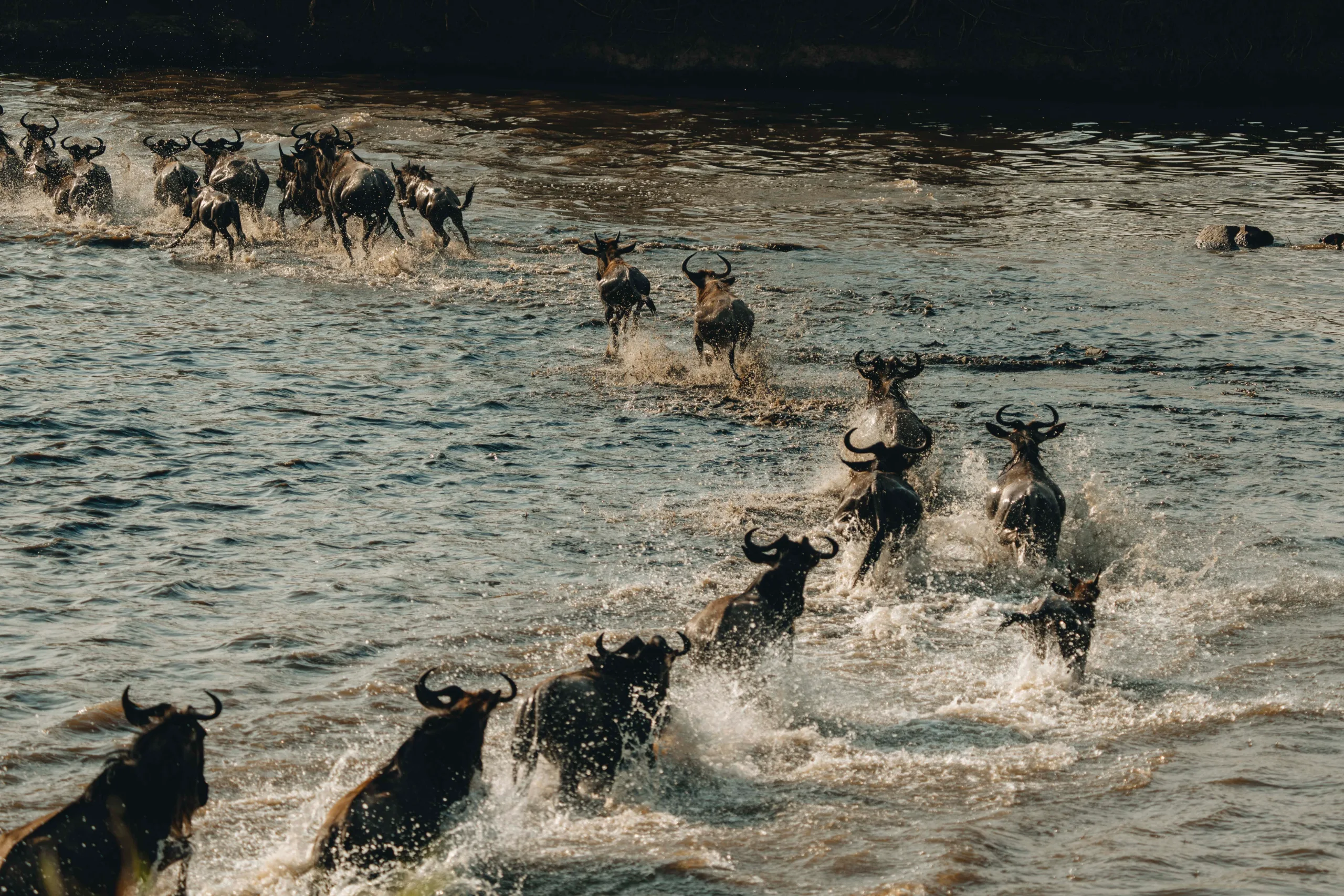
The migration is often described as a river crossing. It is more accurate to describe it as a continuous circuit and Tanzania holds the majority of it.
- 1.5m wildebeest
- 200,000 zebra
- 300,000 Thomson's gazelle
- 1,600km travelled each year
The herds move in a broadly clockwise loop across the Serengeti Mara ecosystem, following rainfall and the grazing it produces. That is why the movement is a pattern rather than a timetable.
Kenya's Maasai Mara is a genuine part of this ecosystem, but it represents the northern portion of the circuit and a shorter window of the year. If you want flexibility over when you travel and still be near the herds, Tanzania gives you more of the calendar to work with.
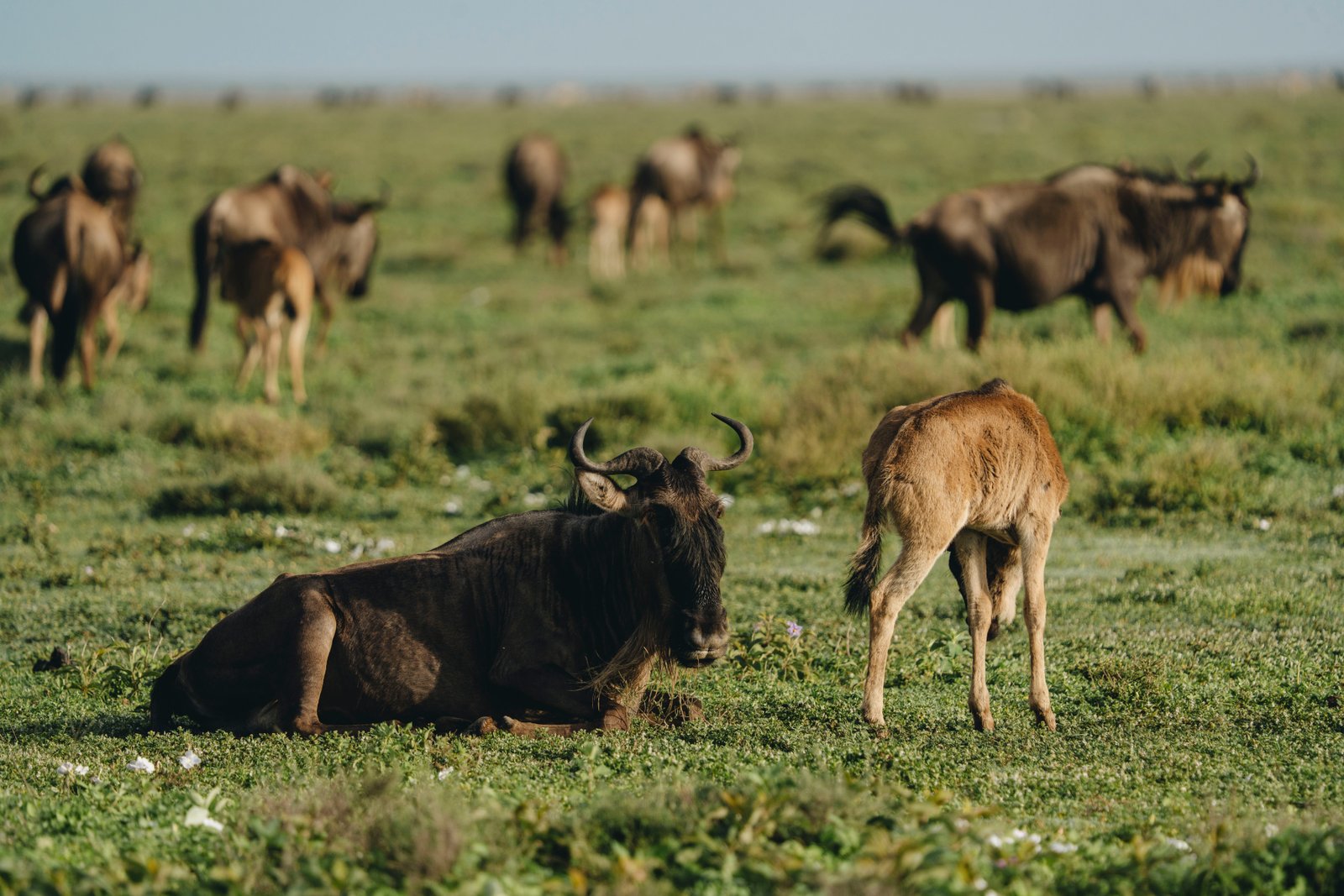
Two practical points matter before you book. The herds respond to rain, so the same week can look different from one year to the next. And a migration safari is not only about the crossings: calving season delivers sustained predator activity that many experienced travellers rate more highly than a river crossing they may or may not witness.
- January March: Calving at Ndutu and the southern Serengeti
- April June: North and west with the long rains, towards the Grumeti
- July October: Northern Serengeti and the Mara River crossings
- November December: The return south as the short rains begin
Inspire tip
Decide which chapter of the migration you want before you choose dates. Calving and the crossings happen in different regions of the Serengeti, and no single itinerary covers both.
If you are planning around the herds, our Great Migration safaris set out each chapter of the cycle, with detail on the calving season and the river crossings.
The Serengeti works in every month
The migration is the headline. The resident wildlife is the reason the park holds up regardless of when you visit.
The name comes from the Maa word siringet, meaning something close to extended place. It covers roughly 14,750 square kilometres, and it is not one uniform landscape.
The short grass plains in the south, the acacia woodland and kopjes of the central Seronera area, the riverine corridors of the west and the rolling hills of the north each support different animals and different kinds of viewing.
Resident lion prides, leopards, elephant, buffalo, giraffe, hippo and a long list of plains game do not leave when the wildebeest do. This matters practically as well as commercially: a Serengeti safari booked in April or November is a serious wildlife experience, not a consolation prize.
Our Serengeti National Park guide covers the regions and how they differ, and most of our Tanzania safari itineraries build in enough Serengeti nights to reach more than one of them.
Best for: year round travel, big cats, scale, second safaris.
One of Africa's strongest destinations for big cats
"You will see lots of lions" is an unhelpful thing to promise. What is true, and more useful, is that each of the three cats is favoured by different terrain and northern Tanzania has all three.
Lions
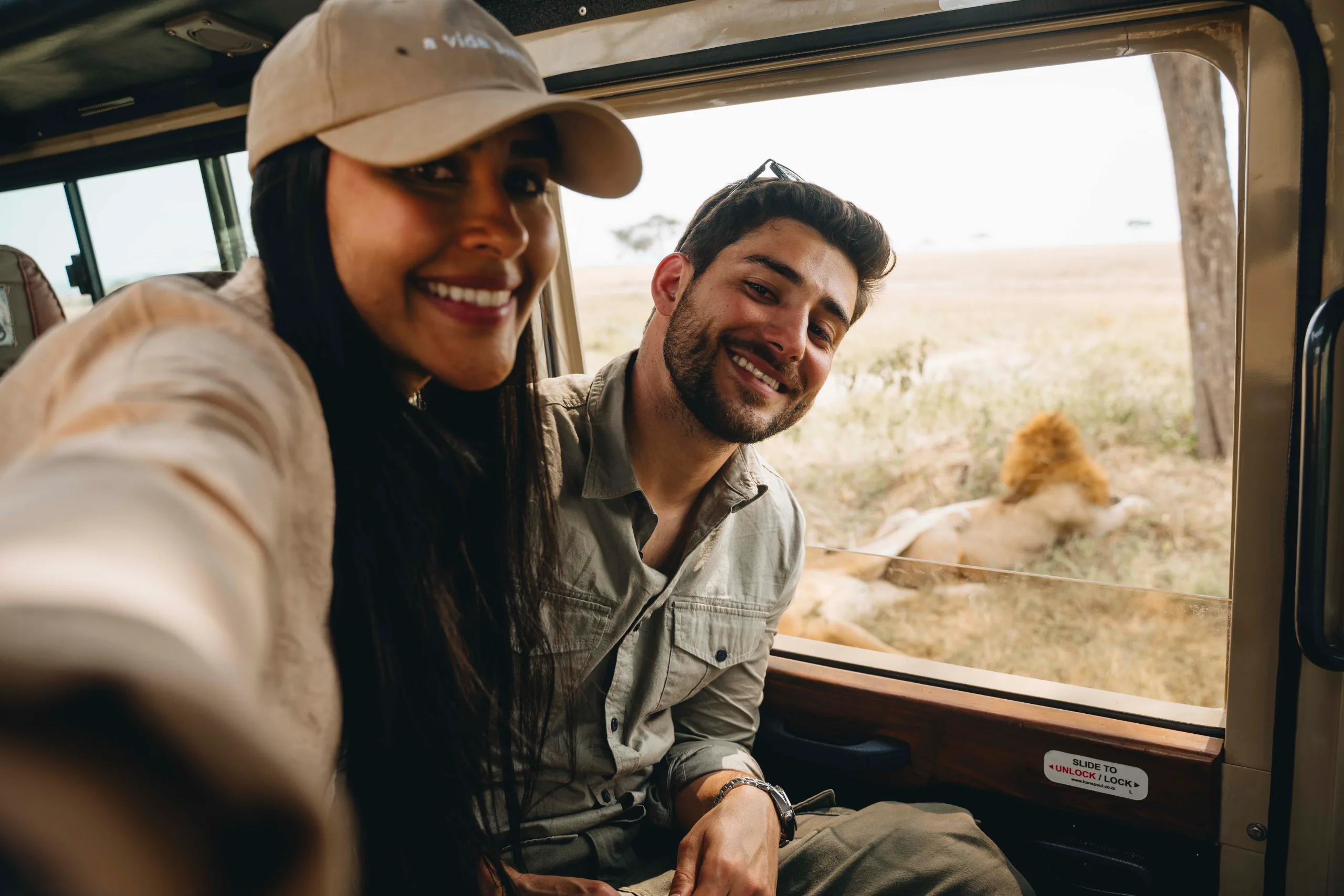
The greater Serengeti ecosystem supports one of the largest lion populations anywhere on the continent, with decades of research behind it. Prides here are often large and habituated to vehicles, which means behaviour rather than glimpses: cubs, pride politics, hunting attempts at dawn.
Cheetahs
The southern and central short grass plains are among the better places in Africa to see cheetah, because open ground suits their hunting method and makes them findable. During calving season, activity on the Ndutu plains is often exceptional.
Леопарды
Leopards need cover, and the Seronera valley's riverine trees are one of the classic places to find one draped along a branch in the middle of the day. Sightings are never guaranteed patient guiding and time in the right habitat move the odds.
What actually changes the odds: guiding, not luck
Radio communication between vehicles, a guide who knows individual territories, and the willingness to sit with a sighting rather than move on. Photographers plan specifically around cat behaviour and light, which is why our photographic safaris run longer sittings and earlier starts.
Ngorongoro delivers density found almost nowhere else
Roughly 260 square kilometres of grassland, swamp and soda lake, enclosed by walls rising around 600 metres.
The Ngorongoro Crater is the largest intact volcanic caldera in the world, and the wildlife inside it is largely resident, because the crater floor provides water and grazing year round.
The practical consequence is density. A single day on the crater floor can produce lion, elephant, buffalo, hippo, flamingo and, with some luck, black rhino. For travellers with limited time, or those who want to be confident of a strong wildlife day, it is one of the most reliable places in East Africa.
It is also busy, particularly between mid morning and midday in high season. The way to experience it well is an early descent and a considered route, which is part of what a well planned Ngorongoro Crater safari is designed to manage.
Inspire tip
The rim sits above 2,200 metres and is genuinely cold before sunrise, in every month. Guests who pack for heat alone regret it on the descent.
Best for: short trips, black rhino, first safaris, guaranteed density.
The variety is real, not marketing
Tanzania's parks are genuinely different from one another, which means a two week journey never repeats itself.
- Serengeti: open plains, kopjes, riverine woodland. Strongest for the migration, big cats and scale.
- Ngorongoro Crater: enclosed caldera, grassland and soda lake. Strongest for density, black rhino and short trips.
- Tarangire: baobabs, river valley, seasonal swamps. Strongest for elephant herds in the dry season.
- Lake Manyara: groundwater forest, escarpment, alkaline lake. Strongest for birdlife and a contrasting half day.
- Ruaha: vast, rugged, sparsely visited. Strongest for a wilderness feel, predators and few vehicles.
- Nyerere: river systems and lakes in the south. Strongest for boat safaris, walking and wild dog.
- Mahale Mountains: forested slopes on Lake Tanganyika. Strongest for chimpanzee trekking and remoteness.
Most first time visitors travel the northern circuit, and with good reason. Travellers returning for a second or third safari often move south and west, where the Ruaha wilderness and the remote western parks offer a quieter, more expeditionary kind of journey.
Safari and the Indian Ocean in a single journey
Zanzibar is a short flight from the safari circuit, which makes the combination logistically simple rather than ambitious.
After several early mornings and long game drives, the contrast of a few days on the coast is not indulgence. It is what makes a two week trip feel restorative rather than tiring.
The island is also a destination in its own right: Stone Town's architecture and history, spice farms, dhow sailing, reef diving and the long tidal beaches of the east and north coasts.
Sequence matters
Safari first, coast second. Arriving at the ocean with the plains still fresh is the better order and it means any delay early in the trip does not compromise your wildlife days.
Journeys that combine both
- 10 дней в северной Танзании и Занзибар 10 days. The most requested shape.
- 12 дней Северная Танзания и Занзибар 12 days. More depth in the parks first.
- Luxury Honeymoon Safari & Zanzibar Beach Escape 11 days. Couples and honeymoons.
There is more here than the game drive
A game drive is the core of a safari, not the whole of it and Tanzania supports an unusual range of alternatives within the same trip.
Hot air balloon safaris
At first light, over the Serengeti before sunrise, landing to a bush breakfast. The aerial scale is something ground level cannot give you.
Walking safaris
On foot, with an armed ranger. Walking changes the scale of the landscape entirely and returns your attention to tracks, birds and detail.
Night game drives
After dark, in the concessions where they are permitted genet, civet, bushbaby and hunting cats that daylight never shows you.
Cultural encounters
Beyond the parks, alongside coffee farm visits in the Arusha highlands and boating safaris in the southern parks.
What quality actually rests on
Guiding, more than anything else. A good guide changes what you see, how long you stay, and how much you understand of what you are looking at. It is the part of a safari that cannot be bought back later, and the part we weight most heavily when we build a journey.
So why Tanzania?
Other African countries offer excellent safaris, and the right answer depends on what you want.
What Tanzania offers, more consistently than most, is a combination that does not require compromise: the majority of the migration circuit, resident wildlife that performs in every month, exceptional big cat viewing, genuinely varied landscapes, and a coastline close enough to add without complicating the trip. For a first safari, that is why the northern circuit remains the most recommended route in East Africa. For a returning traveller, the south and west are still relatively undiscovered.
When is the best time to go on safari in Tanzania?
There is no genuinely poor season. June to October is driest and busiest with excellent general viewing; January to March brings calving on the southern plains; April, May and November offer green landscapes, fewer vehicles and often better value.
How many days do you need?
Five to seven days covers the northern circuit properly. Eight to ten allows a deeper Serengeti stay or a migration focused route. Ten to twelve is the comfortable length for safari combined with Zanzibar.
Can you see the Big Five?
Yes, although rhino is the difficult one. Lion, leopard, elephant and buffalo are all realistic on a northern circuit safari, and Ngorongoro offers the best chance of black rhino. No operator can guarantee sightings.
Is Tanzania good for a first safari?
It is one of the most straightforward in Africa: short internal flights, well established camps, an experienced guiding profession, and parks that deliver wildlife without requiring long, punishing drives.