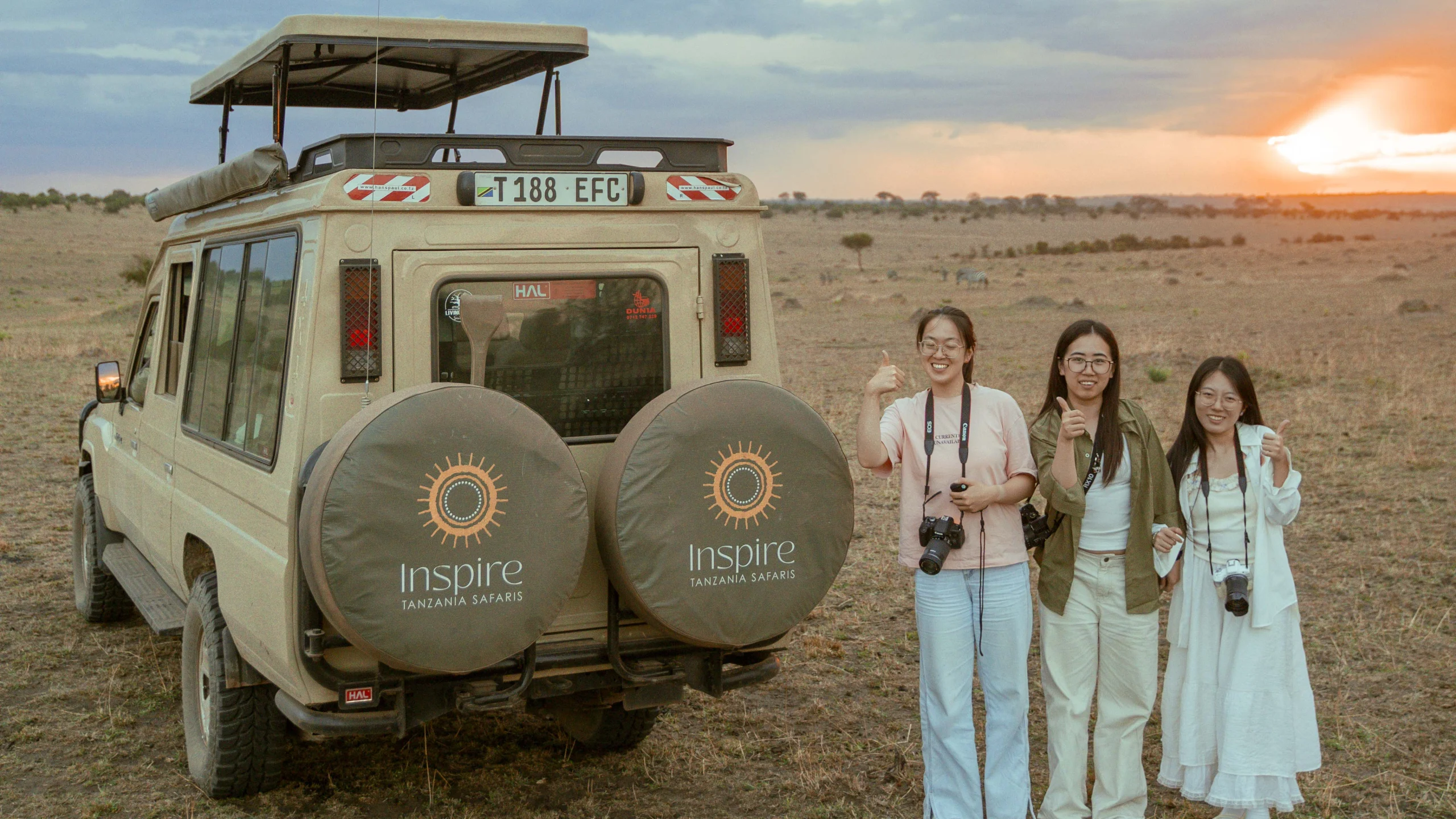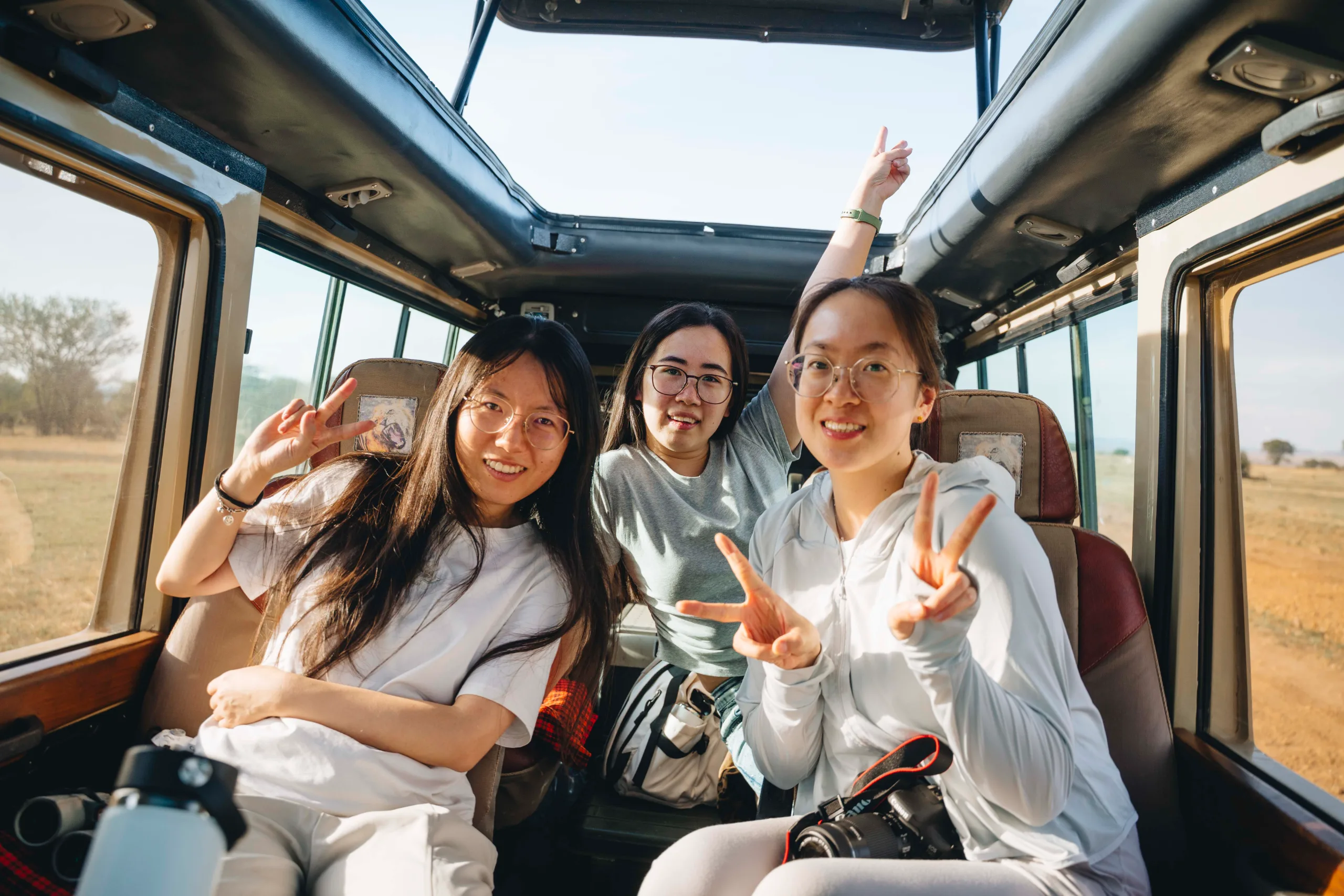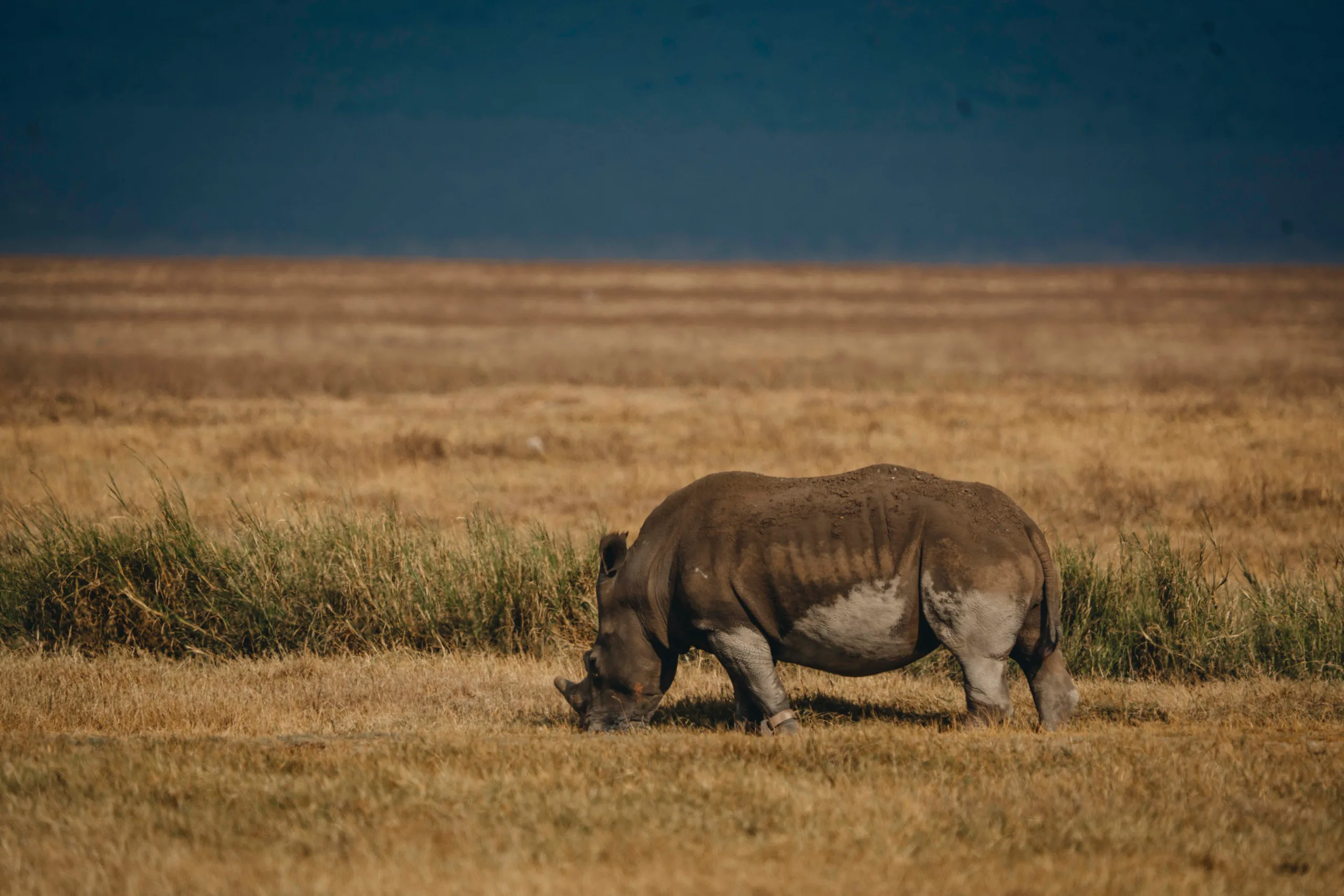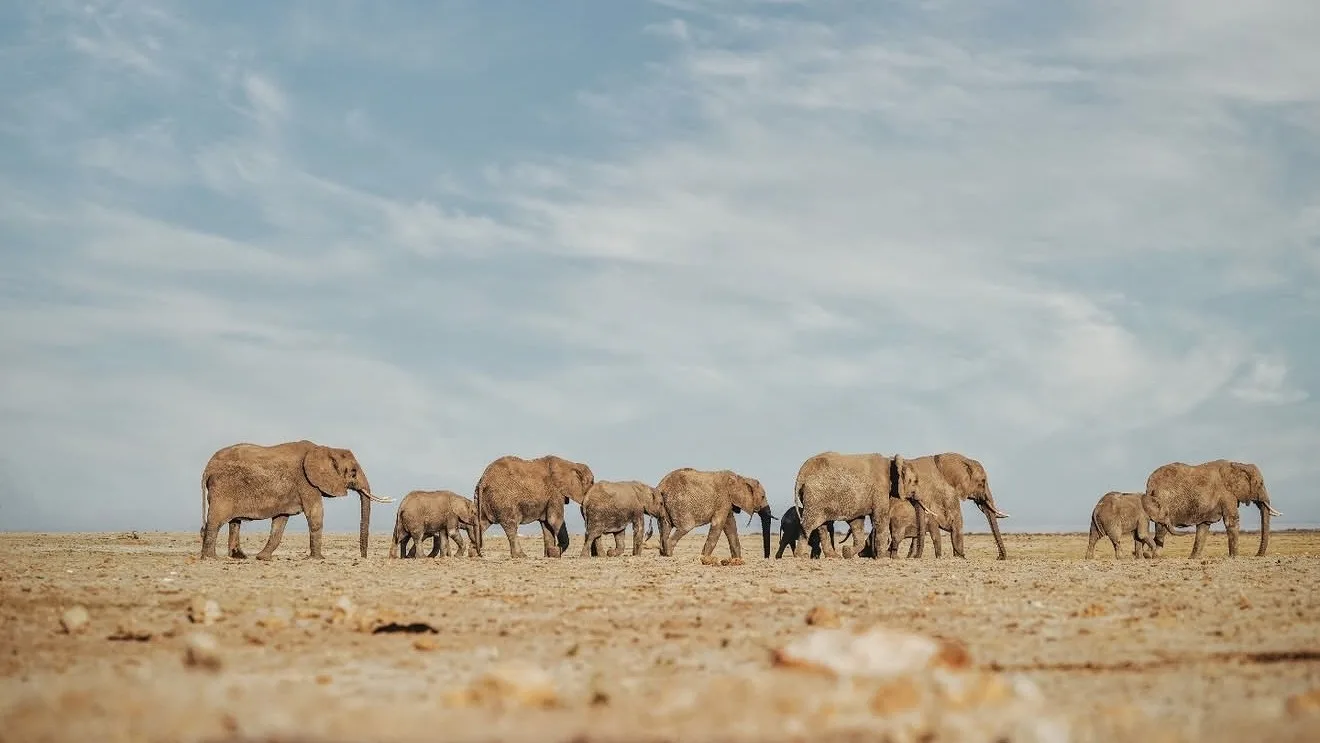






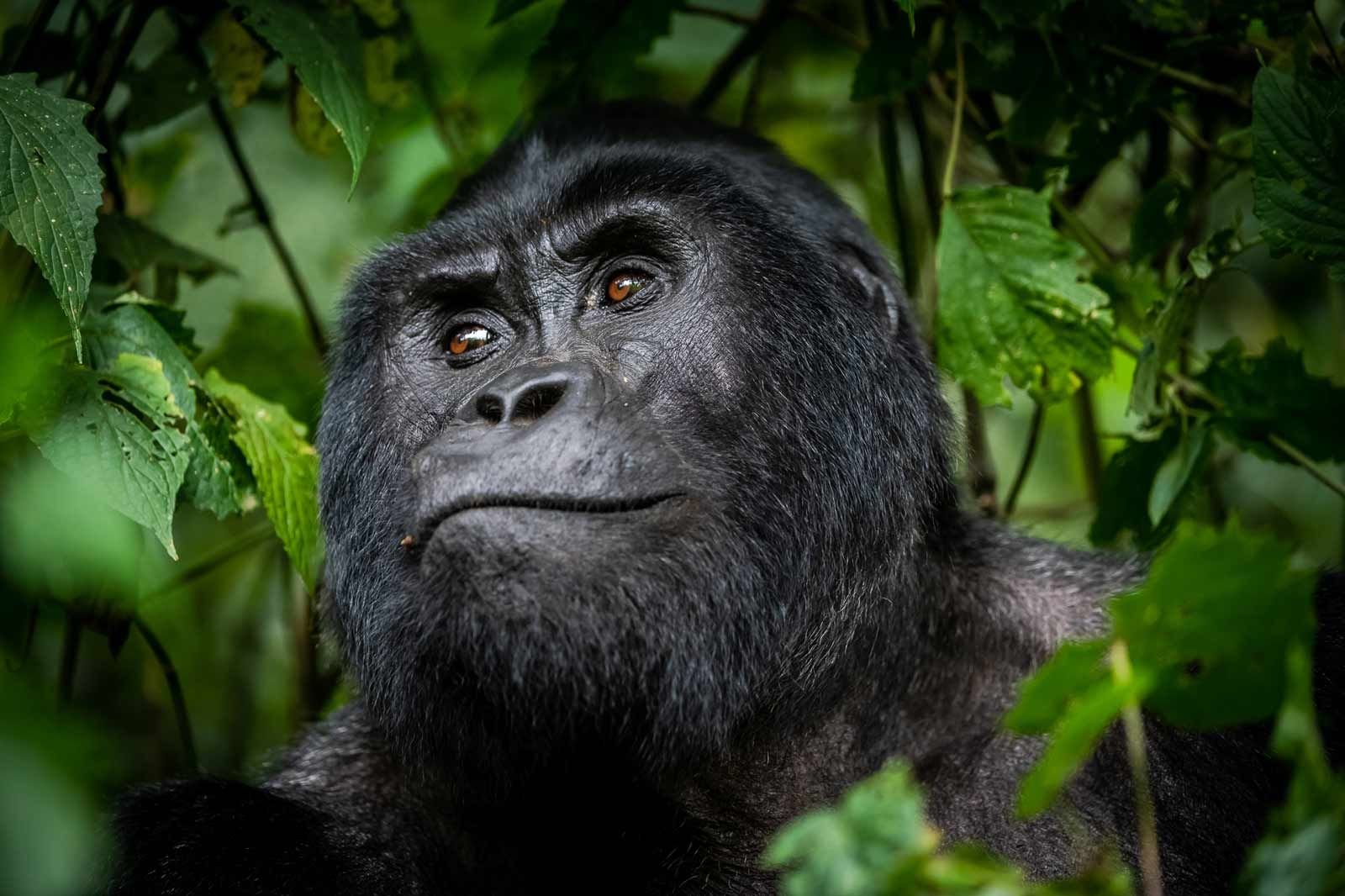
Few journeys in Africa offer as much contrast as a morning with mountain gorillas in Rwanda followed by several days on the open plains of the Serengeti in Tanzania. One takes place on foot in cool, steep forest; the other in a safari vehicle across grassland that stretches to the horizon.
This guide explains what gorilla trekking involves, how it pairs with a Serengeti safari, and the practical points to plan for: permits, fitness, flights, timing and the number of days to allow.
Gorilla Trekking in Rwanda's Volcanoes National Park
Mountain gorilla trekking in Rwanda takes place in Volcanoes National Park, in the far northwest of the country. The park protects the Rwandan side of the Virunga volcanoes, a chain of mountains shared with Uganda and the Democratic Republic of Congo. Its slopes are covered in bamboo, montane forest and open meadows, and they are home to several gorilla families that have been habituated to the presence of people.
The park headquarters at Kinigi is usually a drive of two to three hours from Kigali, Rwanda's capital and main international airport. Most travellers stay at a lodge near the park the night before their trek.
What to Expect on a Mountain Gorilla Trek
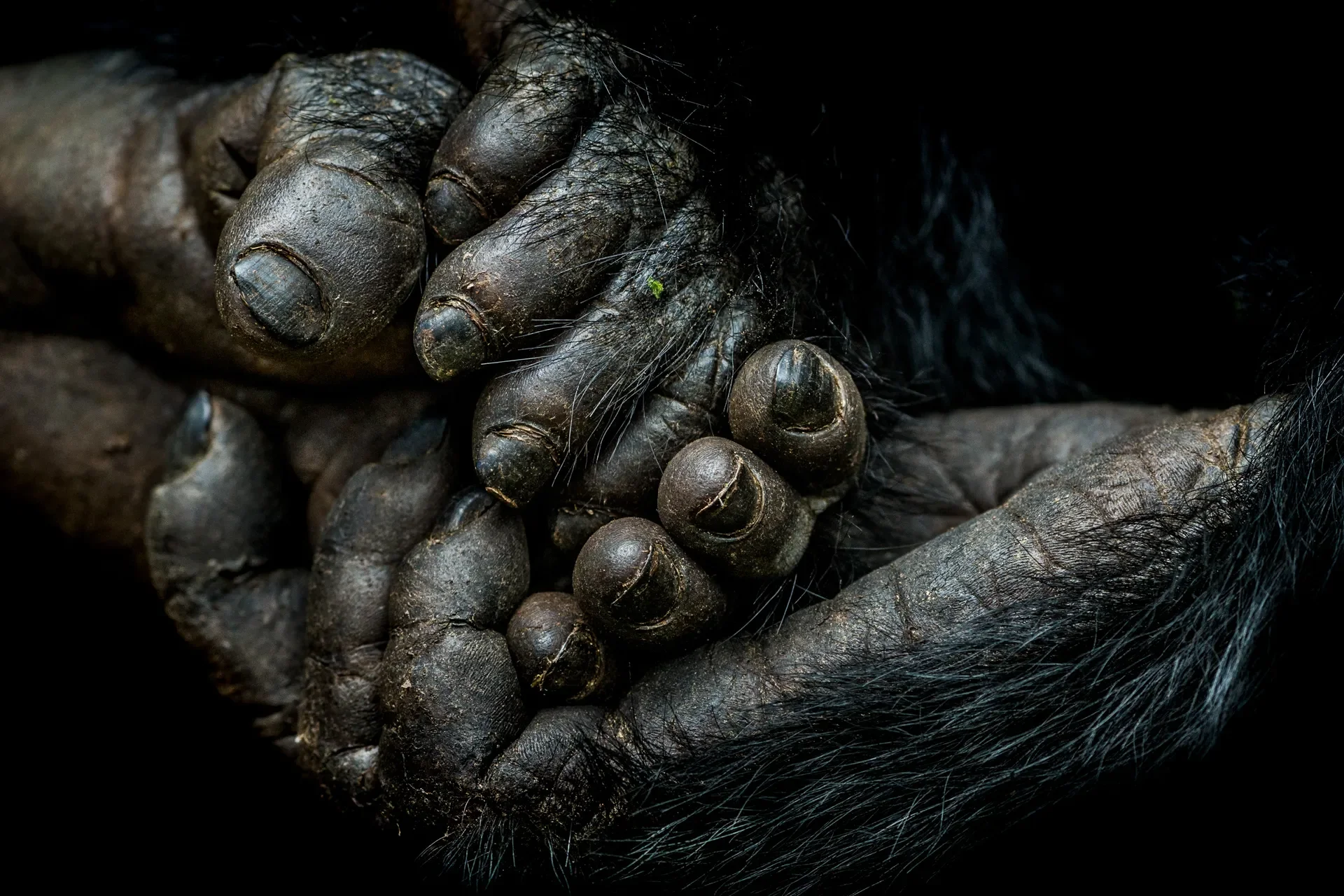
The day begins early with a briefing at the park headquarters, where visitors are assigned to a gorilla family and a ranger. Each family can be visited by a small group of up to eight people per day. Trackers go ahead to locate the gorillas, and your group follows on foot.
Once the gorillas are found, you spend up to one hour with them, keeping a respectful distance and following the ranger's instructions. Walking time varies with the family and where they have moved overnight: some groups reach the gorillas within an hour, others walk for several hours.
Our page on gorilla trekking describes the experience in more detail.
Physical considerations
Gorilla trekking is a hike, not a walk in a park. Trails can be steep, muddy and slippery, vegetation is dense, and the trekking takes place at altitudes above 2,000 metres. Weather on the volcanoes changes quickly, and rain is possible in any month.
A reasonable level of fitness makes the day more enjoyable. Walking sticks are usually provided, and local porters can be hired to carry your daypack and help on difficult sections. Long trousers, sturdy waterproof boots, gloves for nettles and a rain jacket are essential. Visitors who are unwell should not trek, because gorillas are vulnerable to human illnesses.
Gorilla trekking permits
Every trekker needs a permit issued by the Rwanda Development Board. Because each gorilla family receives only a small number of visitors a day, permits are limited and can sell out months ahead, particularly from June to September. At the time of writing, the permit for international visitors costs US$1,500 per person, with lower rates for some East African and African residents. Prices and rules change, so confirm current details before booking. The minimum age for gorilla trekking is 15.
The Serengeti and Its Wildlife
Serengeti National Park lies in northern Tanzania and is one of Africa's best known wildlife areas. It is home to large populations of lions, cheetahs, leopards, elephants and giraffes, and it is the setting for most of the Great Migration, the year round movement of more than a million wildebeest with zebra and gazelle. There are no mountain gorillas in the Serengeti or anywhere else in Tanzania.
Why Gorilla Trekking and a Savannah Safari Work Well Together
The two experiences complement each other because they are so different. In Rwanda, the focus is a single, close encounter with one family of great apes, reached on foot. In the Serengeti, you spend several days observing a wide range of species and the relationships between predators and prey across a large landscape.
Many travellers find the order matters less than the pacing. Trekking early in the journey, while energy is high, works well; so does ending with gorillas after time on safari. The key is allowing a rest day between long travel days and the trek.
How Many Days to Allow
For most travellers, three nights in Rwanda and five to seven nights in Tanzania works well, giving a journey of roughly nine to twelve days. Three nights in Rwanda allows arrival in Kigali, the drive to Volcanoes National Park, the trek, and time for a second trek or another activity. In Tanzania, five nights or more allows the Serengeti together with the Ngorongoro Crater. Our 10 Days in Rwanda and Tanzania itinerary shows one way to balance the two countries.
Flight Connections and Itinerary Planning
Kigali and Kilimanjaro are linked by scheduled flights with RwandAir, with a flight time of under two hours. These flights do not operate every day, so the rest of the itinerary is usually built around the available flight days. From Kilimanjaro or Arusha, travellers continue to the Serengeti by light aircraft or by road through the Ngorongoro highlands.
Other routes connect through Nairobi or Dar es Salaam. Light aircraft into the Serengeti have strict baggage limits, usually requiring soft bags, which is worth planning for before you pack hiking boots and rain gear for Rwanda.
Accommodation and Comfort
Lodges near Volcanoes National Park range from comfortable mid range properties to very refined boutique lodges, many with fireplaces, because nights at this altitude are cool. In the Serengeti, permanent lodges and tented camps are available across the park, with seasonal camps positioned to follow the migration. Choosing lodges close to the park entrance in Rwanda and close to the right wildlife area in the Serengeti matters more than the label on the property.
Best Times to Plan the Combined Journey
Gorilla trekking runs throughout the year. The drier months in Rwanda, generally from June to September and from December to February, offer easier trails. June to September pairs well with the migration in the western and northern Serengeti, while January and February pair well with the calving season in the southern Serengeti. March to May is the wettest period in both countries, when trails are muddier and some Serengeti camps close.
Organising a Journey Through Two Countries
A combined trip involves two sets of entry requirements, international and regional flights, a gorilla permit purchased in advance, and coordination between guides in each country. Rwanda and Tanzania have separate visa arrangements, and Tanzania has introduced an inbound travel insurance requirement. Yellow fever certificate rules depend on your route between countries, so check them with official sources. Working with one operator who manages the whole journey reduces the risk of missed connections and gaps between the two parts of the trip.
Questions fréquemment posées
Can you see mountain gorillas in Tanzania?
No. Wild mountain gorillas live only in the Virunga volcanoes of Rwanda, Uganda and the Democratic Republic of Congo, and in Uganda's Bwindi Impenetrable National Park. Tanzania offers chimpanzee trekking in Gombe Stream and Mahale Mountains instead.
How fit do you need to be for gorilla trekking?
You need to be comfortable hiking for several hours on steep, uneven and muddy ground at altitude. Porters and walking sticks help considerably.
What is the minimum age for gorilla trekking in Rwanda?
The minimum age is 15 years.
How long is the flight from Kigali to Kilimanjaro?
The scheduled flight takes under two hours, but it does not run daily, so plan around the current timetable.
How many days do you need for gorillas and the Serengeti?
Nine to twelve days is comfortable: about three nights in Rwanda and five to seven in Tanzania.
A journey that combines mountain gorillas with the Serengeti needs careful timing, from securing permits to matching flight days with the right safari camps.